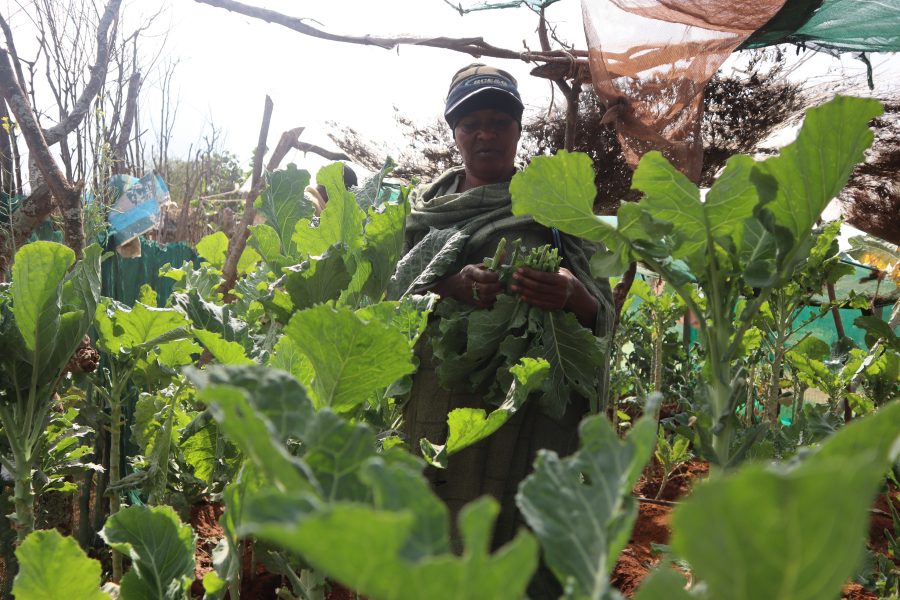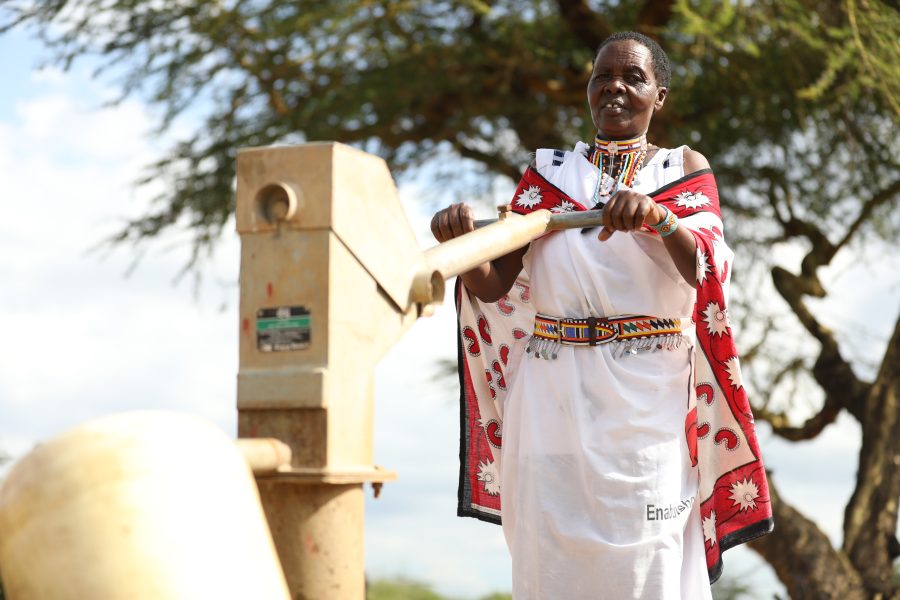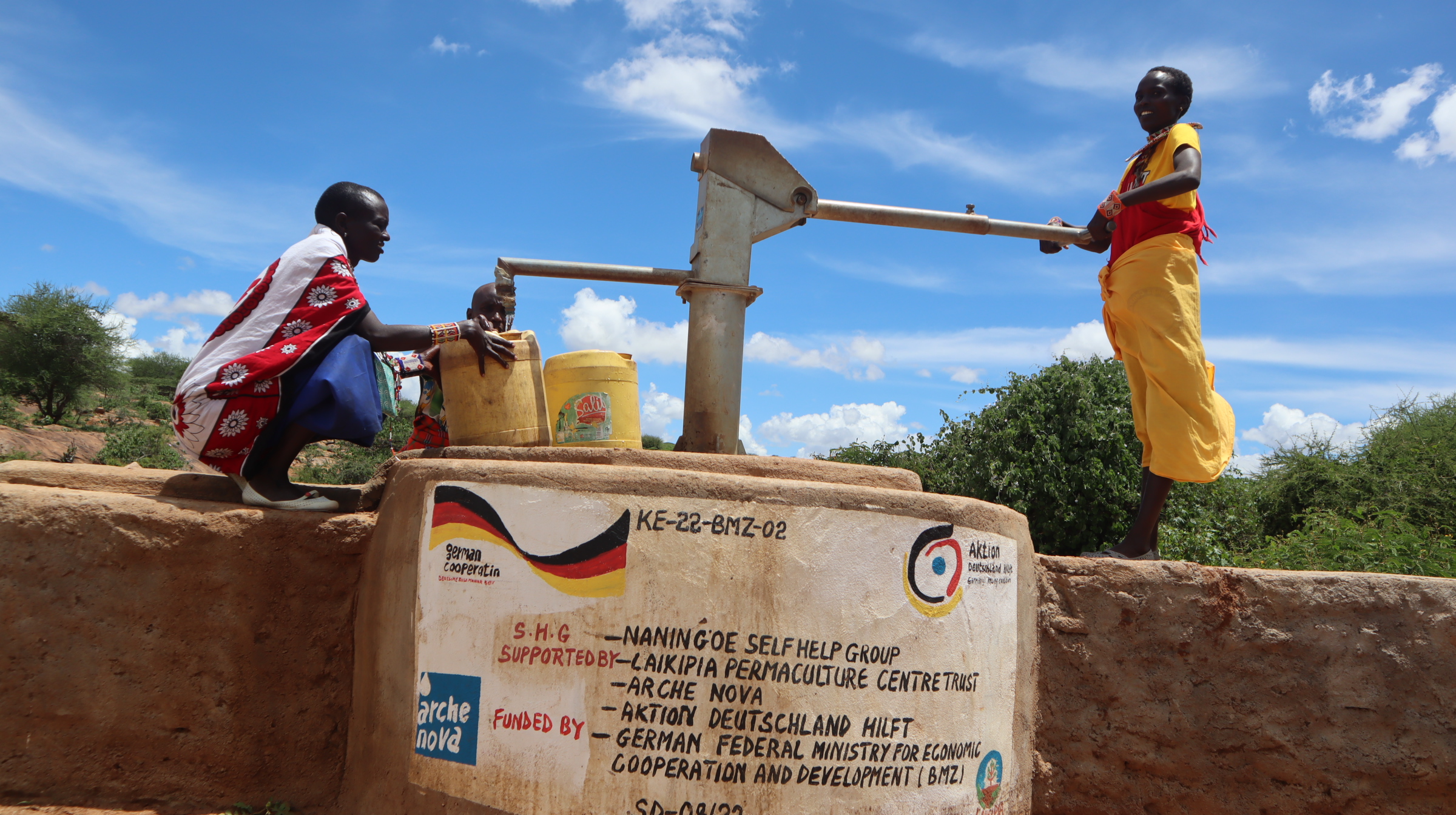
Monica Nkaiduri is a mother, a farmer, and a proud member of the Naningoe Women Group, a collective of 40 resilient women living and working together in a cultural manyatta. Like many women in her community, Monica’s days were once defined by long, exhausting walks in search of water—an essential resource that always seemed just out of reach. Life in Naningoe has never been easy. The women depend on livestock for their livelihoods, and they supplement their income with beadwork. But markets are unpredictable, and income is never guaranteed. Still, they persist—raising families, tending animals, and holding their community together.
Everything began to change when the group received training and support. Monica started a small kitchen garden, planted trees at her home, and learned new skills that she now uses daily. Though modest, these changes have brought visible impact. “If we had not been trained, we would not have known these things,” she reflects. Today, her home has growing trees, and her family benefits from fresh food and small income from surplus produce. But the most transformative change came with the construction of a sand dam.
For years, water scarcity had been one of the biggest challenges for the women. They would walk long distances, often under harsh conditions, just to fetch water for their families. This burden fell squarely on their shoulders—alongside caring for children, tending livestock, and managing households.
Determined to change their situation, the women came together to build the sand dam themselves.
“It was our problem,” Monica says. “So we built it with passion.”
They collected stones, sand, and even learned how to mix cement—hard, labor-intensive work that many had never done before. At one point, they mixed up to 150 bags of cement. It was not easy, but it was necessary
Today, the sand dam stands as a symbol of their strength and unity—and its impact is profound.
Water is now closer to home. Monica can tend to her animals, complete her chores, and still fetch water in the evening—even as late as 7 pm—without the fear or exhaustion that once came with long journeys. During the last drought, while neighboring communities struggled, Naningoe women relied on their sand dam and shallow well. They did not have to travel to distant places like Nkiloriti or Kimanjo in search of water.
The benefits go beyond convenience.
Health in the community has improved significantly. In the past, families suffered from waterborne diseases due to unsafe water sources. Today, the water from the shallow well is clean enough that Monica does not always need to boil it before drinking. Children go to school clean and healthy. Kitchen gardens are thriving, nourished even by recycled household water.
The sand dam has also proven to be durable and reliable—it has never required repairs since its construction. It stores water for long periods and supports both domestic use and small-scale irrigation.
For Monica, the change is deeply personal. It means dignity, time saved, healthier children, and hope for the future.
Looking ahead, she dreams of even more. The group has beehives that are yet to be colonized, but they remain hopeful that soon they will produce honey for sale. She also calls on other women to come together and take action.
“Let us hold hands and build more sand dams,” she urges. “We are the ones who face these challenges, and we can solve them.”
Monica’s story is not just about water. It is about empowerment, resilience, and what happens when communities are given the knowledge and support to transform their own lives.
Through her voice, we see the real impact of this work—not just in infrastructure built, but in lives changed.